
Review · COFFEE & TEA PLANTATION TOURS
Kigali: Traditional Coffee Experience ( Bean to Brew)
Coffee becomes more interesting when you make it yourself. At Kigali’s Umurishyo Arts Gallery, you follow Rwandan coffee from fruit and bean to roasted cup, with traditional preparation, modern roasting, and plenty of time for questions. I like the hands-on work, especially opening the fruit, pounding the beans, and brewing what you have prepared. I also like the cultural setting, where coffee is part of a wider program of music, crafts, games, and community work.
The main point to understand is that this is not always a drive out to a large coffee plantation. Some sessions center on the cultural center in the city, with coffee plants or fresh beans used to explain the early stages. That urban setting is a possible drawback if you expected a full farm visit, but it also makes this a practical Kigali activity that fits into a short stay.
You should allow between 150 minutes and three hours. The $50 price is fair if you value personal instruction, a tasting, and support for a local social project. Guides may lead the session in English, French, or Swahili, and past sessions have been led by people including Deborah, Gilbert, John, and Chaplan.
In This Review
- Key points to know before you go
- Starting at Umurishyo Arts Gallery in Kigali
- Seeing how Rwanda’s coffee starts
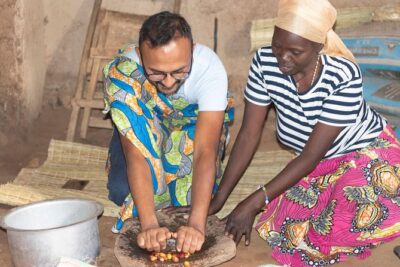
- Traditional roasting and the work of pounding beans
- Brewing your own Rwandan coffee
- The cultural side of the coffee session
- Guides, languages, and the small-group feel
- What the $50 price really covers
- Timing, flexibility, and practical planning
- Who will enjoy this most
- Should you book the Umurishyo coffee experience?
- FAQ
- Where does the traditional coffee experience meet?
- How long does the experience last?
- How much does the activity cost?
- Is transportation included?
- Do I visit a coffee plantation?
- Do I roast the coffee myself?
- Will I taste the coffee at the end?
- Which languages are available?
- Is the activity suitable for people with food allergies?
- Can I cancel or pay later?
Key points to know before you go

- You make the coffee yourself: Work through the stages from fruit to drink instead of simply watching a demonstration.
- The setting is Umurishyo Arts Gallery: Expect a cultural center in Kigali, not necessarily a remote plantation.
- Traditional methods are part of the fun: Roasting and pounding the beans give the session a tactile, old-fashioned feel.
- The tasting includes local styles: You may sample black coffee and coffee prepared with ginger, along with other local blends.
- The cultural program goes beyond coffee: Depending on the session, you may learn about music, dance, crafts, traditional life, or Igisoro.
- Your money has a local purpose: The center uses its income to support community work and local makers.
Starting at Umurishyo Arts Gallery in Kigali

The meeting point is Umurishyo Arts Gallery, also described as a cultural center. This matters because the experience begins in a place with more going on than coffee alone. You may see artisan crafts, learn about Rwandan customs, or hear about the center’s work with children and local families.
The welcome can include drums, which gives the opening a ceremonial feel without turning the activity into a stiff museum talk. The tone is social and informal. You are encouraged to take part, ask questions, and get your hands busy.
I would plan to arrive ready for an active session rather than a polished coffee tasting alone. Wear something comfortable, since you may handle coffee fruit, beans, roasting equipment, and pounding tools. The activity is not suitable for people with food allergies, so take that restriction seriously before booking.
The center’s social purpose adds meaning to the visit. Its operators use income to support an NGO, help children leave the streets and return to school, and sell crafts made by those children. You are not simply paying for a drink. Part of the fee helps keep a local project working, though you should still judge the activity on its content and not only on its charitable aim.
Other coffee and tea plantation visits:
- Women-led Coffee Farm Trek
★ 5.0 · 19 reviews - Rwandan Coffee Experience
★ 5.0 · 10 reviews - Painting with Delicious Coffee
★ 5.0 · 9 reviews
Seeing how Rwanda’s coffee starts

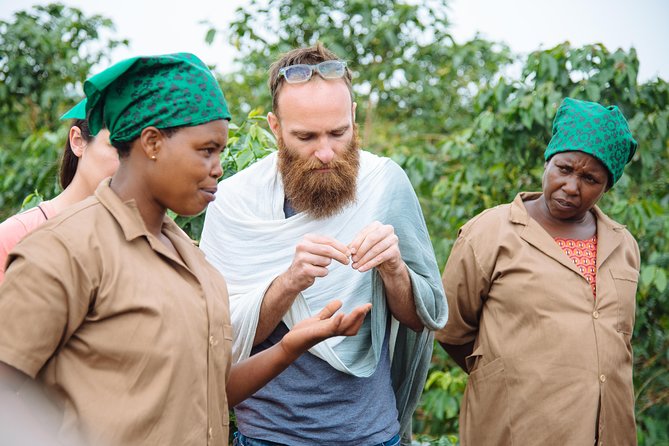
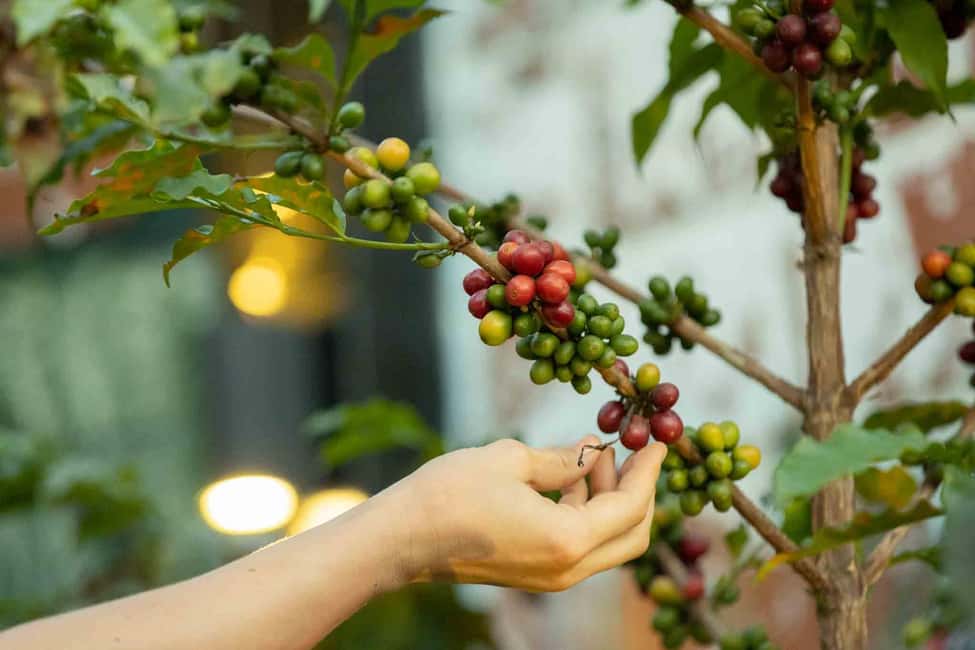
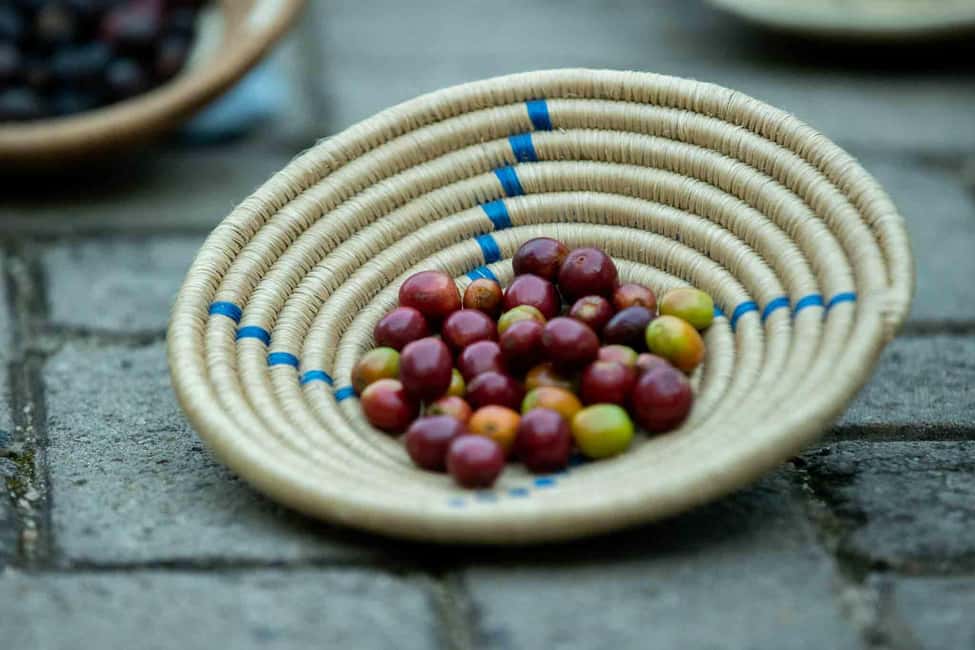
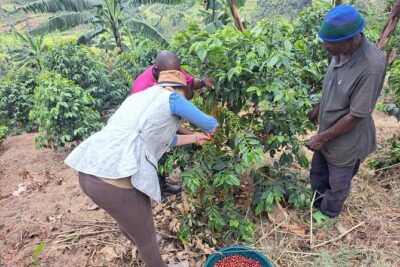
The first part explains the coffee plant and the work needed before a bean reaches a roaster. You may see or handle coffee fruit, sometimes described as fresh coffee cherries, and learn how the beans are taken from inside. This is the useful part of the experience for anyone who normally sees coffee only as a sealed bag or a café drink.
The guides explain Rwanda’s coffee traditions, the path from cultivation to processing, and the sustainable practices used by local communities. The presentation is more valuable when you take part, so do not hang back and wait for a perfect demonstration. One useful tip from the activity is simple: roll up your sleeves and join in, even if the early steps feel unfamiliar.
The exact farm element can vary in how it is presented. The description refers to coffee fields, while feedback from the session makes clear that many people spend their time at the city-based cultural center rather than driving to a plantation. One person did pick fresh beans, while another specifically appreciated learning about coffee without going to a farm.
For me, this is best understood as a field-to-cup lesson with a cultural center as its base. If a working plantation is essential to your plans, confirm the day’s format before you pay. If you want to learn the full process without giving up half a day to transport, the Kigali location may suit you better.
Traditional roasting and the work of pounding beans

The roasting section gives the activity its strongest sense of place. You learn a traditional method, then compare it with a modern approach. That contrast helps you understand that coffee preparation is not one fixed ritual. It changes with tools, time, and purpose.
The traditional process involves roasting the beans and pounding them before brewing. These steps require patience and some effort. They also make the final cup feel earned. You are not just being handed an expensive tasting flight. You have helped prepare the drink from an early stage.
I like this part because it gives you a physical sense of coffee making. Smell, heat, sound, and texture all matter. The work also creates natural conversation with the guide. You can ask why one roasting method is used, how the beans change, and how the finished drink differs from coffee prepared by a modern machine.
The modern roasting section offers a useful comparison, but the supplied information does not specify the equipment or technical detail. Do not expect a professional barista course with precise extraction charts. This is a cultural coffee activity, designed to show traditional and current methods in a friendly way.
The pace can be patient and generous. Several sessions have involved guides who took time to explain each step, which is helpful if you have never handled green coffee beans. At the same time, the total length can reach three hours, so you should not book this immediately before a fixed appointment.
Brewing your own Rwandan coffee
The reward comes at the end, when you drink coffee made from the work you have just completed. The tasting may include black coffee, ginger coffee, and other blends made with local beans. Ginger is a particularly nice touch because it gives you a preparation that feels tied to local taste rather than a standard café menu.
This is also where the coffee’s story becomes clear. A guide can explain origins and processing, but tasting the result gives you a better reference point. You can compare the styles, ask about the flavors, and decide which preparation you prefer.
The tasting takes place in a Kigali coffee-shop setting or within the cultural center’s coffee area, depending on the session. The setting is described as charming and personal rather than grand. That suits the activity. You are there to talk, taste, and connect, not to sit through a formal professional judging session.
Some sessions finish with a certificate. It is a small extra, but it gives the activity a pleasant ending, especially for families or first-time coffee makers. You may also have time to speak with the owner and the team about their work.
Remember that coffee is a tasting, not a guarantee of a particular style. If you dislike strong coffee, ginger, or unfamiliar preparations, you may find the final part less appealing. People with food allergies should not book this activity.
Other coffee mornings in Kigali:
- Specialty Coffee Masterclass
★ 5.0 · 33 reviews - Full Day Shared Akagera Safari Tour with Lunch and Coffee
★ 5.0 · 15 reviews - Local Community Tour(Cultural, Coffee,Village walk,Local food)
★ 5.0 · 8 reviews - Private Half-Day Guided Kigali City Tour with Coffee Break Included
★ 5.0 · 6 reviews
The cultural side of the coffee session
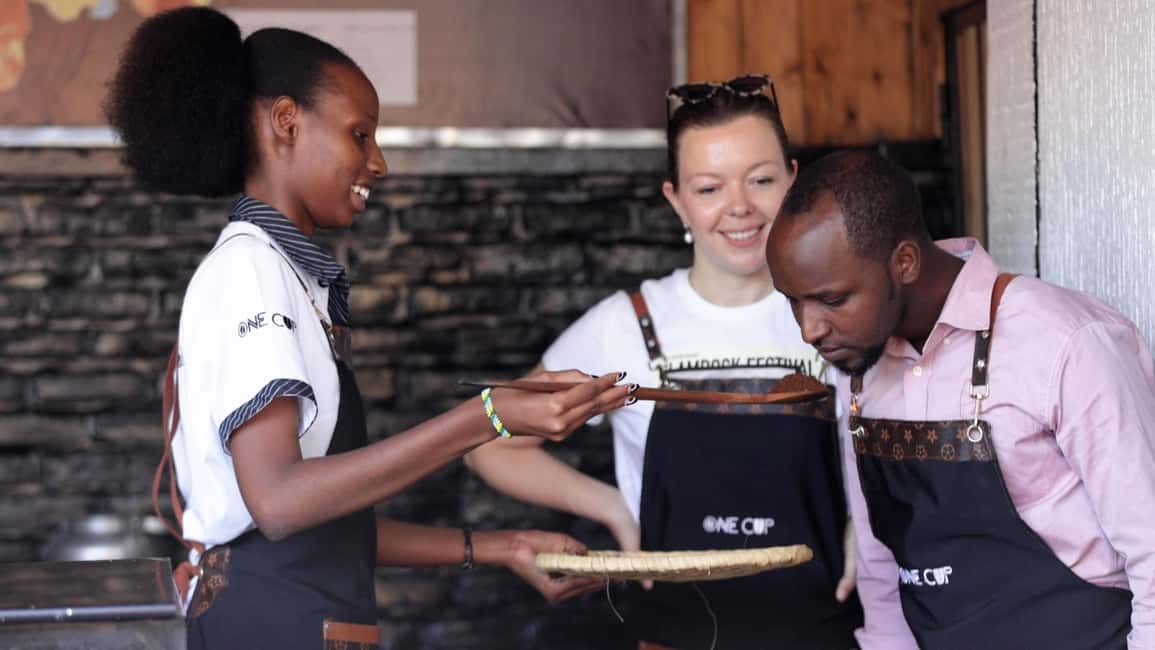
Coffee is the main subject, but the center gives you a wider look at everyday Rwandan culture. Depending on the guide and the time available, you may hear about music, dance, traditional life, and local history. One guide also introduced a participant to Igisoro, a traditional Rwandan board game.
That variety is a major reason to choose this experience over a standard coffee shop tasting. You are not only learning how to roast beans. You are meeting people who use coffee, crafts, performance, and education to support their work.
The atmosphere can be playful. One session continued with football at the center after the coffee activity, and another included a walk around Kimironko Market with Chaplan. These additions are not guaranteed parts of the stated activity, so treat them as possible personal touches rather than promised stops.
The quality of the cultural exchange depends partly on your approach. You will get more from the experience if you ask questions and accept the invitation to participate. If you prefer a quiet, highly structured tour with no side conversation, the informal format may feel less efficient.
Guides, languages, and the small-group feel
Instruction is offered in English, French, and Swahili. That makes the activity accessible to a broad range of people visiting Kigali, though you should select the language you need when checking availability.
Guides named in session feedback include Deborah, Gilbert, John, and Chaplan. Their styles differ, but the common thread is patience and clear explanation. Gilbert has been praised for showing people around the center and explaining music, dance, culture, and daily life. John has been described as a good storyteller during the coffee-making process, while Deborah received praise for her teaching.
The experience is described as taking place in a small group. That is a practical advantage. You have a better chance to handle the equipment, speak with the guide, and ask questions than you would in a large demonstration.
Do not assume the exact guide will be available on your date. The provider is NuttinTODO, and the session may be led by different members of the team. The quality can also depend on group size and timing, but the available information points to a personal style rather than a rushed commercial production.
What the $50 price really covers
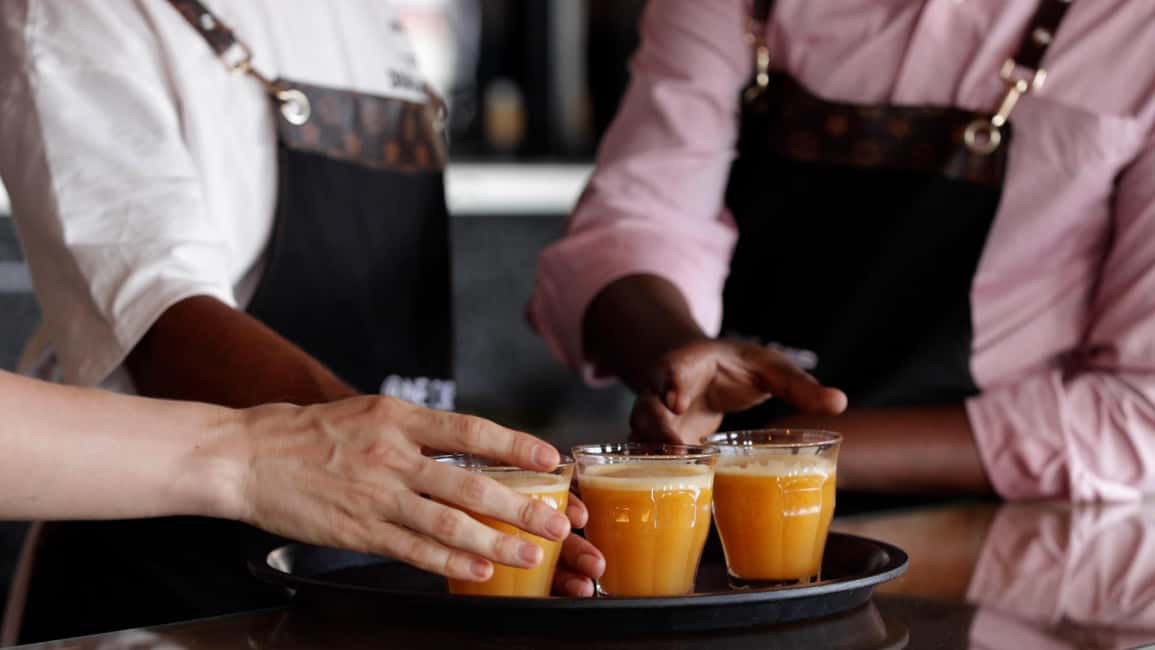
At $50 per person, this is not the cheapest way to drink coffee in Kigali. The value comes from the amount of activity packed into the price. You receive guidance at the cultural center, instruction in traditional and modern roasting, a coffee tasting, cultural context, and direct support for local businesses and community work.
I would compare the cost with three separate Kigali activities: a café visit, a short cultural talk, and a craft or community stop. This experience combines elements of all three, while adding the unusual chance to prepare the coffee yourself.
The price does not include transportation to the meeting point or personal expenses. You must make your own way to Umurishyo Arts Gallery, so factor in the time and cost of reaching it. The information provided does not give a transport service, hotel pickup, or a separate plantation transfer.
The best value comes if you are willing to take part fully. If you only want to watch a professional roast beans and sip coffee, $50 may feel high. If you want a personal activity with a local social purpose, the fee is easier to justify.
Timing, flexibility, and practical planning
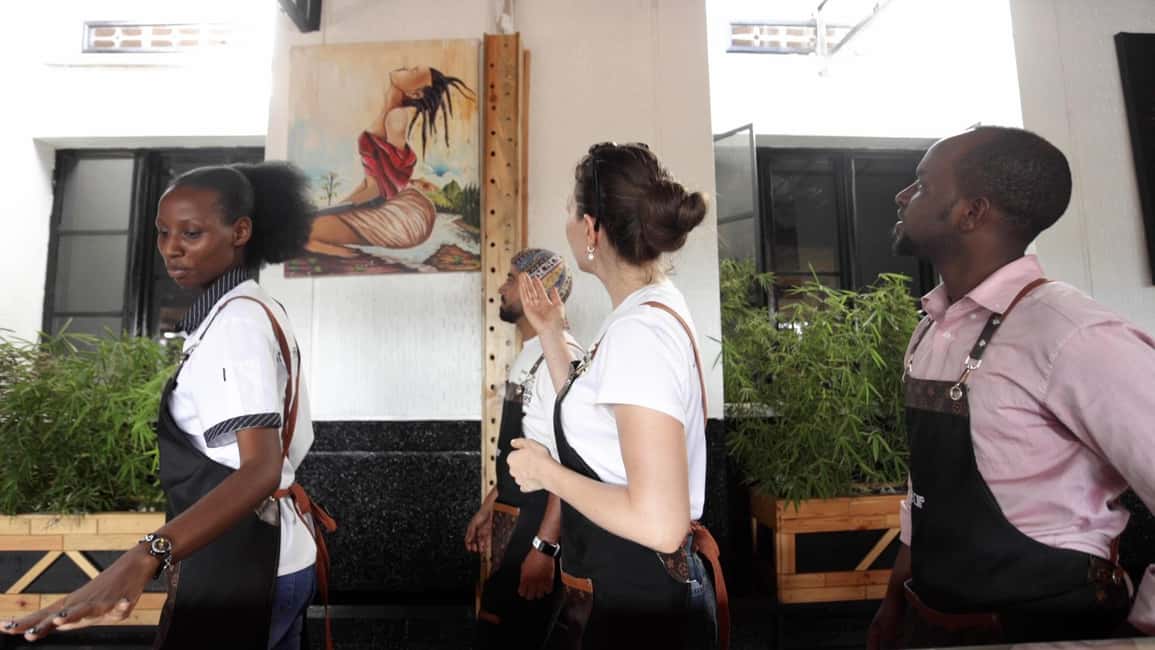
The advertised duration is 150 minutes to three hours. That range is wide enough to affect your day, so check the available starting time before booking. A short session may focus tightly on the coffee stages, while a longer visit may allow more conversation and cultural activities.
The activity offers free cancellation up to 24 hours before the start time for a full refund. You can also reserve now and pay later, which helps if you are still arranging your Kigali schedule. These policies are useful, but they do not remove the need to arrive at the correct meeting point and allow enough time for transport.
The instructors speak English, French, and Swahili. Food allergies are the main stated restriction. No other physical requirements are given, but the hands-on roasting and pounding mean you should expect to participate rather than remain seated throughout.
A good plan is to avoid booking this directly before an airport transfer, formal tour, or restaurant reservation. The session may finish in two and a half hours, or it may run closer to three. If the guide and group are enjoying the cultural exchange, the extra time can be part of the appeal.
Who will enjoy this most
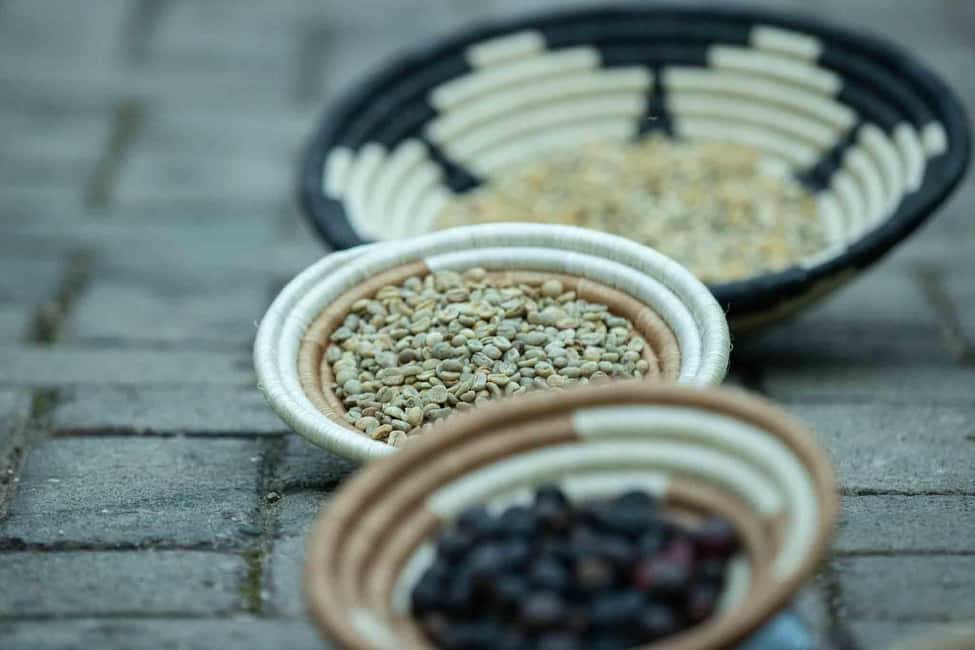
I would recommend this experience to coffee lovers who want more than a polished cup. It also suits people interested in local enterprise, traditional skills, and small cultural projects.
Families and first-time visitors may like the clear sequence. You can see the coffee fruit, process the beans, roast them, pound them, and drink the result. The certificate at the end adds a simple souvenir.
It is also a good choice for a short Kigali stay. You do not necessarily need a long trip outside the city to understand the basics of Rwandan coffee. The city setting makes the activity easier to fit into a busy itinerary.
You may want another option if your main goal is to walk through a large commercial farm, study coffee production at a technical level, or attend a formal barista class. The experience is about culture and participation first, technical training second.
Should you book the Umurishyo coffee experience?
Book it if you want to make coffee with local guides, learn traditional methods, taste ginger coffee, and support a community-centered cultural project. The strongest part is the chance to handle the process yourself, from fruit to roasted bean to cup.
Before booking, confirm how the field portion will work on your date. The city cultural center is a strength for many people, but it is not the same as a full plantation visit. Also check the start time, plan your own transport to Umurishyo Arts Gallery, and allow the full three hours.
For most visitors who enjoy food, culture, and conversation, this is a worthwhile Kigali activity. It gives you a better understanding of Rwanda’s coffee than a quick café stop, and it leaves you with something more useful than a souvenir: the memory of making the cup yourself.
FAQ
Where does the traditional coffee experience meet?
The meeting point is Umurishyo Arts Gallery in Kigali.
How long does the experience last?
The duration is between 150 minutes and three hours. Starting times vary, so check availability when booking.
How much does the activity cost?
The listed price is $50 per person.
Is transportation included?
No. Transportation to the meeting point is not included, and personal expenses are also excluded.
Do I visit a coffee plantation?
The experience includes a coffee field-to-cup explanation, but the session may take place mainly at the city-based Umurishyo Cultural Centre. Confirm the exact format before booking if a plantation visit is important to you.
Do I roast the coffee myself?
Yes. You take part in both traditional and modern roasting methods, with guidance from the local team.
Will I taste the coffee at the end?
Yes. The experience ends with an exclusive tasting of local blends. Coffee may be served black or prepared with ginger.
Which languages are available?
The instructors offer English, French, and Swahili.
Is the activity suitable for people with food allergies?
No. People with food allergies should not take part.
Can I cancel or pay later?
You can cancel up to 24 hours in advance for a full refund. The reserve-now, pay-later option lets you book without paying immediately.
Recently added in Kigali
- Vegan Fine Dining Experience★ 5.0 · 5 reviews
- Walking Food Tour in Remera and Kigali★ 5.0 · 4 reviews
- 2 Days Mountain Gorilla Safari Rwanda★ 5.0 · 4 reviews
- Traditional Drumming and Dancing Class★ 5.0 · 2 reviews
- Gorilla Trekking Adventure – A Day trip (Only transfer)★ 5.0 · 2 reviews
- Rwanda One Day Gorilla Trekking with Iby’iwacu Culture Visit★ 5.0 · 2 reviews
- Private Transfer from Kigali Airport (KGL) to Kigali★ 4.0 · 5 reviews
- One Day Mount Bisoke Hike Adventure Tour in Volcanoes Park★ 4.5 · 4 reviews
Coffee & Tea Plantation Tours, compared.


Browse the lists this tour appears in