
Review · LAKE KIVU TOURS
Tea and coffee tours
Coffee tells a story before it reaches your cup. This three-hour outing from Gisenyi gives you a closer look at Rwandan farming, with local tea and coffee knowledge, a Lake Kivu setting, and a small group capped at eight people. I like the focus on local production and the chance to see how coffee moves from harvest toward washing and packaging. I also like that bottled water and lunch are included, which helps the $80.70 price feel more useful than a simple short farm visit.
The main point to check before booking is the exact route. The advertised starting point is Rubavu, while the experience is described around Gisenyi and may include Lake Kivu or the Kinunu Coffee Washing Station. Pickup is offered, but private transportation is not included, so confirm how you will reach the starting point and which stops are planned.
In This Review
- Key points to know before booking
- Why this short farm visit is worth your morning
- Starting in Rubavu at 8:00 am
- Lake Kivu gives the tour its setting
- Kinunu and the coffee washing process
- Tea production adds a second crop story
- What the guides add to the visit
- Is $80.70 a fair price?
- Who will enjoy this experience most?
- What to confirm before you go
- Should you book the Gisenyi tea and coffee tour?
- FAQ
- Where does the tea and coffee tour start?
- How long does the experience last?
- Is Lake Kivu part of the experience?
- Is a boat ride included?
- What is included in the price?
- What is the cancellation policy?
Key points to know before booking
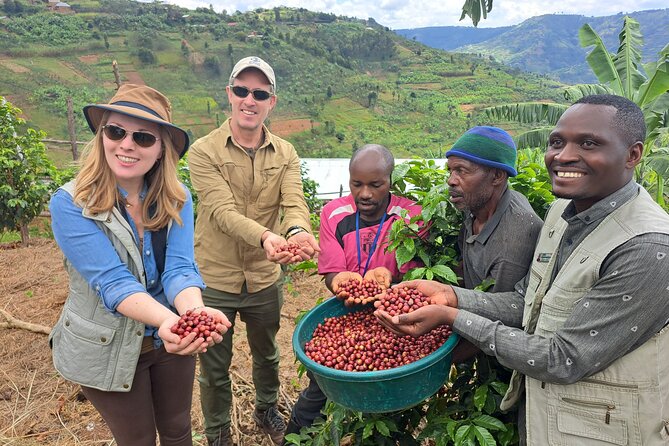
- A small group of no more than eight should make it easier to ask questions and hear the guide clearly.
- The Kinunu Coffee Washing Station may be part of the day, with a boat pickup from the Kigufi area described in one detailed account.
- Tea and coffee are both mentioned, including tea harvesting, processing, and packaging.
- Lake Kivu adds a scenic setting and connects the farm experience to one of Rwanda’s major natural features.
- Lunch and bottled water are included, useful for a morning outing with transport or a boat ride involved.
- The tour starts at 8:00 am and returns to the meeting point, with free cancellation up to 24 hours ahead.
Why this short farm visit is worth your morning
Gisenyi, also known as Rubavu, is one of the best bases for seeing western Rwanda. It sits beside Lake Kivu, near the border with the Democratic Republic of the Congo. The town is often used as a starting point for lake activities, but it also gives you access to the working side of the region: farms, washing stations, and the people who turn crops into products sold far beyond Rwanda.
That is what makes this experience more useful than a standard coffee tasting. You are not simply handed a finished cup and told that Rwanda produces good coffee. You get a chance to see the work behind it, from harvesting to processing, and perhaps to packaging.
I especially like the scale. With a maximum of eight people, this is not designed as a large coach outing. A small party gives you a better chance to ask how coffee cherries are handled, what a washing station does, and how tea production differs from coffee production.
The three-hour length also fits neatly into a Rwanda itinerary. You can spend the morning on the tour and still have time for other plans in Gisenyi. The trade-off is that you should not expect an all-day agricultural expedition. The experience offers a useful introduction, not an exhaustive survey of every farm in the region.
Other coffee and tea plantation visits:
- Kigali: Traditional Coffee Experience ( Bean to Brew)
★ 4.8 · 54 reviews - Women-led Coffee Farm Trek
★ 5.0 · 19 reviews - Rwandan Coffee Experience
★ 5.0 · 10 reviews
Starting in Rubavu at 8:00 am
The stated start time is 8:00 am, with the activity beginning in Rubavu and ending back at the meeting point. Pickup is offered, which may be helpful if you are staying in the Gisenyi area, but the transport details need care.
Private transportation is listed as not included. That can mean the supplier may arrange or offer pickup without covering every private transfer involved, or that pickup applies only in certain circumstances. Before paying, ask where the pickup occurs, whether it is included from your accommodation, and if the tour begins on land or at a lakeside departure point.
This matters because one account describes a boat pickup from a lodge in Kigufi near Gisenyi. That points to a possible water-based approach to Kinunu, but it should not be treated as a guaranteed feature of every departure. Your exact plan may depend on the meeting point, weather, and the day’s arrangements.
An early start is sensible. Morning light should be pleasant around Lake Kivu, and an 8:00 am departure leaves room for the farm visit, lunch, and return within the advertised three-hour period. Arrive ready for a schedule that may involve more than one form of transport.
Lake Kivu gives the tour its setting
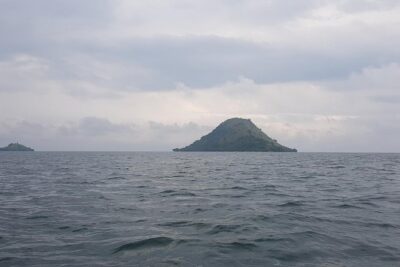
Lake Kivu is one of Africa’s Great Lakes. It lies between Rwanda and the Democratic Republic of the Congo, in the Albertine Rift, the western branch of the East African Rift. Its water flows into the Ruzizi River, which runs south toward Lake Tanganyika.
The lake is the one clearly identified stop for this experience, though the available outline does not give a detailed sequence or length of the stop. You should think of Lake Kivu as both a scenic part of the outing and a useful geographic frame for the coffee visit.
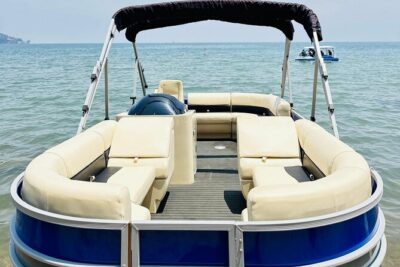
If your departure includes a boat trip, the lake becomes part of the experience rather than just a view from town. One account describes a pleasant boat ride from Kigufi to Kinunu, with pickup arranged at the lodge and the boat arriving on time. That is a helpful detail for anyone staying near the water.
There is also a practical limit. The tour summary does not promise a long sightseeing cruise, swimming, or a dedicated lake excursion. Do not book it mainly for a boat ride. Book it for the combination of lake setting and agricultural visit, with water transport possible depending on the confirmed plan.
Kinunu and the coffee washing process
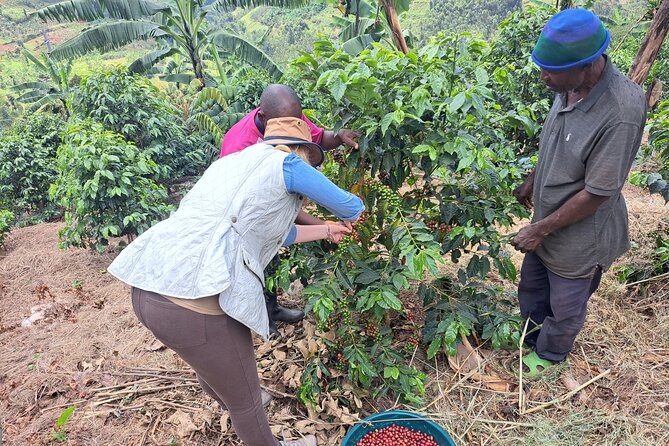
The strongest coffee detail connected with this outing is the visit to the Kinunu Coffee Washing Station. A washing station is where harvested coffee cherries are processed after they leave the farm. Seeing this part of the chain helps explain why the final drink depends on much more than roasting and brewing.
At Kinunu, you might learn how coffee moves from harvested fruit through washing and onward toward later stages of preparation. The available information does not specify every demonstration or machine, so I would avoid expecting a fixed checklist. Still, the station visit gives the day a practical focus that a general farm walk may not provide.
This is also where the tour becomes valuable for coffee drinkers who want more context. Rwanda’s coffee is often associated with high-quality arabica production, but the experience is less about broad claims and more about seeing local work. You can ask direct questions about harvesting, washing, drying, grading, and packaging if those subjects arise during your visit.
One account describes the guided visit as very interesting and says the boat arrived at the lodge on time. That combination matters. Reliable timing is especially welcome when your morning includes a lake crossing and a return to Gisenyi.
The exact coffee component should still be confirmed. The description calls this a coffee farm experience, while the detailed account refers to the washing station. Those are related but not identical stops. A farm visit shows where the coffee grows; a washing station shows what happens after picking. Ask which one is included on your date.
Other coffee mornings in Lake Kivu:
- 1-Day Lake Kivu Karongi Boat Cruise & Coffee farming with Lunch
★ 4.5 · 3 reviews - Specialty Coffee Masterclass
★ 5.0 · 33 reviews - Full Day Shared Akagera Safari Tour with Lunch and Coffee
★ 5.0 · 15 reviews - Painting with Delicious Coffee
★ 5.0 · 9 reviews
Tea production adds a second crop story
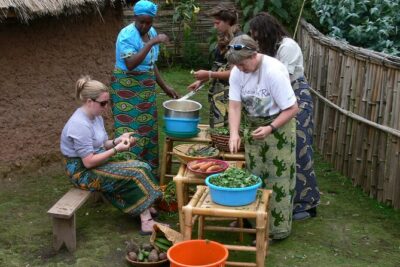
Tea is also part of the experience, and it gives you a useful comparison with coffee. The tea portion may cover harvesting, the production process, and packaging. That progression helps you see how an everyday drink is made, rather than treating tea as a simple plantation photo stop.
The tea visit is described as an especially enjoyable group experience, with a guide who explained the process clearly. The useful detail here is the full chain, from picking to the finished package. If tea is your main interest, ask in advance how much time is devoted to it compared with coffee.
The provided details do not identify the tea farm, the varieties grown, or whether you will pick leaves yourself. You should therefore treat hands-on harvesting as possible but not promised. The confirmed value is the chance to learn about local tea work and see the stages from harvest through packaging.
Having both crops in one morning is a real advantage. Coffee and tea are often consumed without much thought about the labor and processing involved. This tour gives you two different examples of regional agriculture in a compact format.
The compromise is time. In roughly three hours, the visit can introduce both subjects, but it cannot offer a slow, detailed study of each one. If you want a specialist coffee day or a full tea plantation tour, you may need a longer or more focused activity.
What the guides add to the visit
The human side of the experience receives the clearest praise. The guides are described as kind, patient, passionate, and able to explain the work in a way that makes the visit feel personal rather than mechanical.
No guide names are provided, so I cannot point you toward a particular person. That is not a serious problem, but it means you should judge the experience by the company and the small-group format rather than expecting a named specialist.
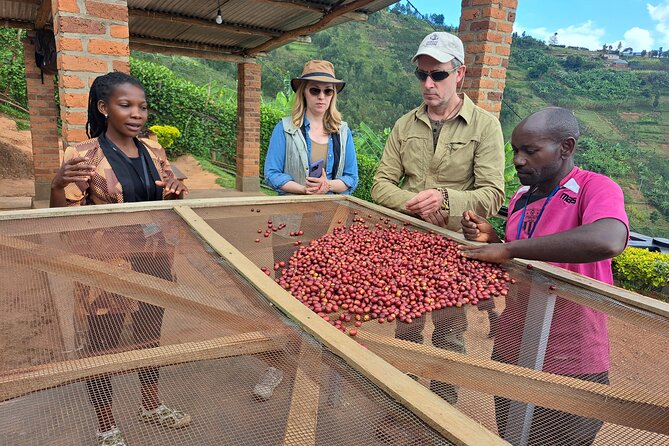
A good guide is important here because the sights alone do not explain themselves. Coffee cherries, drying areas, tea leaves, and packaging equipment can look ordinary if nobody connects them. Clear explanations turn a short stop into something you can remember and understand.
I would prepare a few questions before leaving Gisenyi. Ask what happens between harvesting and washing, how tea is prepared for packaging, and how local farms fit into the wider supply chain. A small group of eight or fewer should make this kind of conversation possible.
The repeated praise for patience also matters if you are not familiar with agricultural terms. You should not need a technical background to follow the visit. The experience is likely to suit curious first-time coffee and tea visitors better than people looking for a formal professional course.
Is $80.70 a fair price?
At $80.70 per person, this is not the cheapest way to spend a morning in Gisenyi. The value depends on what is included in your actual arrangements.
The price covers an organized experience of about three hours, bottled water, and lunch. It may also include access to local sites and guide services that would be difficult to arrange on your own. If your plan includes the lake transfer to Kinunu, the coordination becomes more useful, especially when timing and pickup matter.
The group limit improves the value. An eight-person maximum means you are paying for a more personal outing rather than being folded into a large group. That can make explanations clearer and reduce the waiting that often comes with bigger tours.
Still, private transportation is not included. If you need a separate car or special transfer to Rubavu, your total cost may rise. This is the main financial question to settle before booking. Ask precisely what the $80.70 covers from your accommodation to the meeting point and back.
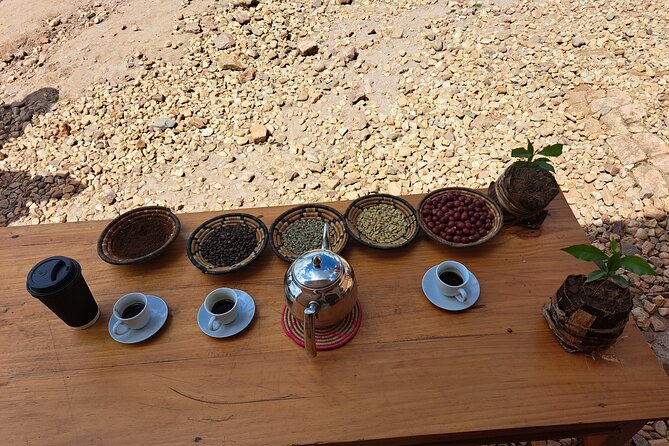
Lunch is a modest but important inclusion. A morning activity that includes a boat ride or several stops can leave you ready for food, and having lunch arranged saves time. The available information does not describe the menu, so do not book based on a particular meal or dietary plan without asking first.
I see the price as reasonable if you want a guided local experience with a small group, lunch, and the possibility of a lake transfer. It is less attractive if you only want a quick coffee tasting or already have transport and local contacts arranged.
Who will enjoy this experience most?
This tour is a good match for you if you want more than scenery. It suits people who enjoy seeing how ordinary products are grown and processed, especially if coffee or tea is part of your daily routine.
It also works well for a short stay in Gisenyi. The three-hour schedule leaves most of the day open, and the return to the meeting point keeps the activity contained. You can add it to a wider Rwanda itinerary without giving up a full day.
Families and mixed-age groups may appreciate the gentle format, since most people can participate according to the stated requirements. The small group can also help children ask questions without competing with a large crowd.
Coffee specialists may find the experience too brief if they want detailed tasting notes, roasting instruction, or extensive time at a farm. None of those features is promised. The same applies if your main aim is a long tea plantation walk.
I would also recommend it for anyone interested in meeting local people through work rather than through a staged cultural show. The emphasis here is on farms, processing, guides, and the route between Gisenyi and Lake Kivu.
What to confirm before you go
The tour information leaves a few points open, and a short message to Beyond the Gorillas Experience can prevent confusion.
Confirm these details before departure:
- Whether your date includes a tea farm, a coffee farm, Kinunu Coffee Washing Station, or more than one of them.
- Whether pickup is available directly from your accommodation in Gisenyi or only from a named meeting point in Rubavu.
- Whether any boat transfer on Lake Kivu is included, and where the boat departs.
- What private transportation is excluded from the $80.70 price.
- What lunch includes if you have dietary restrictions.
- Whether poor weather changes the route or cancels the activity.
The weather rule is straightforward. If poor weather causes cancellation, you will be offered another date or a full refund. For your own cancellation, cancel at least 24 hours before the 8:00 am start for a full refund. Cancellations or changes made within 24 hours are not refunded or accepted.
Mobile tickets make it easy to keep your booking details with you. Confirmation is sent at booking, and most people can take part. Keep the confirmation available in case the pickup point or route needs checking on the morning.
Should you book the Gisenyi tea and coffee tour?
I would book this experience if you want a small, local, practical introduction to Rwanda’s tea and coffee work, especially if you are staying near Gisenyi and like the idea of adding Lake Kivu to the morning.
The best reasons are the small group, the possible Kinunu washing-station visit, the guide-led explanation of harvesting and processing, and the inclusion of lunch and water. The kind, patient guiding described for the outing is exactly what makes a short agricultural tour worthwhile.
I would pause if you are mainly searching for a guaranteed boat cruise, a long farm walk, or a specialist coffee tasting. The route needs confirmation, private transportation is not included, and three hours limits how much time you can spend at each stop.
Ask the provider to spell out the meeting point and the day’s exact stops. If the plan matches your interests, $80.70 is a fair price for a compact, personal look at the work behind two familiar drinks.
FAQ
Where does the tea and coffee tour start?
The activity starts in Rubavu, Rwanda, at 8:00 am. Pickup is offered, but you should confirm the exact pickup point when booking.
How long does the experience last?
The tour lasts approximately three hours and ends back at the meeting point.
Is Lake Kivu part of the experience?
Lake Kivu is the listed stop. The lake lies between Rwanda and the Democratic Republic of the Congo and may also be connected with transport to the coffee visit, but the exact route should be confirmed.
Is a boat ride included?
A boat pickup from a lodge in Kigufi near Gisenyi to Kinunu is described for one outing, but a boat ride is not clearly guaranteed for every booking. Ask the provider about your date.
What is included in the price?
Bottled water and lunch are included. Private transportation is not included.
What is the cancellation policy?
You can cancel at least 24 hours before the start time for a full refund. Cancellations or changes made less than 24 hours before the start are not accepted or refunded. If poor weather causes the tour to be canceled, you will be offered another date or a full refund.
Recently added in Lake Kivu
- Boat cruise in Twin lakes and Lake Kivu★ 5.0 · 3 reviews
- From Kigali: 8 Hour Day-trip Lake Kivu Cruise Experience★ 4.5 · 3 reviews
- 5 Day Rwanda gorilla and Lake Kivu Safari★ 5.0 · 3 reviews
- 2-Day Private Lake Kivu Kayaking and Holy Rocks from Kigali★ 5.0 · 2 reviews
- The Amazing Congo Nile Hiking & Biking Trail★ 5.0 · 3 reviews
- 1-Day Lake Kivu Karongi Boat Cruise & Coffee farming with Lunch★ 4.5 · 3 reviews
- The Congo Nil Trail Hiking (Gisenyi-Kibuye)★ 5.0 · 3 reviews
- A day trip in Karongi★ 5.0 · 2 reviews
Lake Kivu Tours, compared.



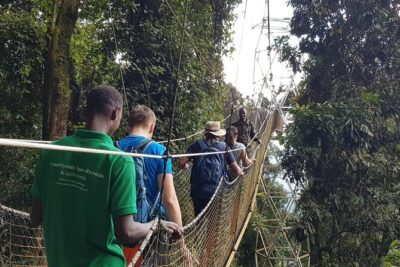
Three-day Nyungwe Canopy and Kivu Lake Adventure
Read our review →Browse the lists this tour appears in