
Review · WALKING TOURS
Kigali: Walking Tour with a Local Guide
Kigali rewards a slower first look. This 150-minute walk connects local markets and art spaces with important places such as the Belgian Peacekeepers Memorial and Downtown. I especially like the flexible route and the chance to learn how to use Kigali’s motorbike taxis, or motos, along the way. The main consideration is that some transfers use a moto or taxi, and those fares are not included.
I also like that the experience can be shaped around your interests. You can focus on history, food, art, Nyamirambo, Nyarutarama Lake, or city views rather than simply following a fixed script. Guide Gloria receives especially warm praise for her easy manner and clear explanations, though the tour is best for visitors who can manage a fair amount of walking and are comfortable with a short ride through town.
In This Review
- Five useful things to know before you go
- Why this Kigali walk works so well on a first visit
- Meeting at Kigali Heights
- Biryogo Car Free Food Street in 20 minutes
- The Belgian Peacekeepers Memorial and a serious pause
- Inema Arts Centre for 30 minutes
- Downtown: city life in a compact finish
- Optional neighborhoods, lake views, and extra local color
- What the guide adds to the experience
- Walking, motos, weather, and what to pack
- Is $30 good value in Kigali?
- Who should book this walking tour?
- Should you book the Kigali walking tour?
- FAQ
- Where does the Kigali walking tour begin?
- How long does the tour last?
- Which language is used on the tour?
- Are motorbike or taxi fares included?
- What should I bring?
- Can the itinerary be customized?
Five useful things to know before you go

- Gloria is the guide most often praised: Her warm, open style helps solo visitors and first-time arrivals feel at ease.
- The route mixes walking with short vehicle transfers: Expect a moto or taxi ride between Inema Arts Centre and the Belgian Peacekeepers Memorial.
- Biryogo Car Free Food Street offers a local start: You can browse crafts, watch daily life, and sample local food.
- The tour handles serious history with care: The Belgian Peacekeepers Memorial and possible Kigali Genocide Memorial visit add vital context.
- It is a strong first-day activity: You get practical tips on transport, food, neighborhoods, and places to explore later.
- Bring small cash and water: Wear shoes suited to uneven streets, and prepare for sun or rain.
Why this Kigali walk works so well on a first visit
At $30 per person, this is not just a transfer between famous sights. You are paying for a local introduction to Kigali, a guide who can answer questions as they come up, and a route that links several parts of the city.
I would place it early in a Rwanda trip. The walk helps you get your bearings around Kigali Heights, the city center, Nyamirambo, and the older parts of town. It also gives you useful ideas for later, including where to eat, how to use motos, and which neighborhoods deserve more time.
The tour lasts 150 minutes, or two and a half hours. That is enough time for a real introduction without taking over your whole day. You should not expect a full survey of Kigali, though. One visitor wanted a broader view of the city as a whole, and that is a fair limitation. Kigali spreads across hills, so a short walking tour can show you selected areas, not every district.
The experience is conducted in English. Guides may help with basic Kinyarwanda translations, which can make simple interactions more comfortable. Gloria is repeatedly praised for asking about visitors’ own backgrounds and connecting Rwandan life with what they already know. That personal exchange is a major part of the value.
A couple more Kigali trips worth comparing
- Kigali Walking Tour
★ 4.5 · 78 reviews - Rwanda Half-Day Walking Food Tour
★ 5.0 · 35 reviews - 1 Day Canopy Walk Adventure in Nyungwe Forest National Park
★ 5.0 · 32 reviews
Meeting at Kigali Heights

The tour begins at the roundabout by Radisson and Kigali Heights, marked by a fountain and statue. This is a practical starting point in a recognizable part of modern Kigali, close to the convention center area.
Your guide meets you there for a short introduction before setting off. If you have already visited one of the listed places, say so at the beginning. Gloria has adjusted routes for visitors who had already seen particular sights, and the itinerary is described as customizable.
That flexibility matters. A first-time visitor may want help with the city’s past and present. Someone who has already visited the genocide memorial may prefer more time in Nyamirambo, at an art center, or around local food streets. Tell your guide what you want before the walking begins.
Kigali’s hills also make the starting point useful. You may catch broad views of surrounding slopes as you move through the city, but the main purpose here is orientation. It is less about a single grand monument and more about understanding how different parts of Kigali fit together.
Biryogo Car Free Food Street in 20 minutes
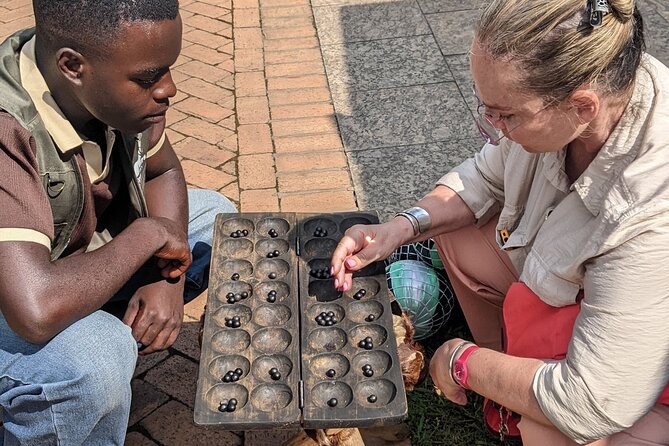
Biryogo Car Free Food Street brings you into a more social side of Kigali. The stop lasts about 20 minutes and can include a guided walk, photographs, local food, and arts and crafts.
A car-free street changes the rhythm of a city. You can walk without the constant pressure of traffic and pay closer attention to food stalls, small shops, people meeting friends, and handmade goods. The exact snacks available may vary, but the stop is intended to give you a taste of local flavors and everyday city life.
I would use this part of the tour to ask questions. What should you order later? Which foods are common in Rwanda? Where do local people go for a casual meal? The guide can provide more useful answers than a quick search, especially if you want to eat beyond hotel restaurants.
Twenty minutes is enough for an introduction, not a long meal. If you want to sit down and eat properly, ask whether the route can allow extra time. The more you stop for food or shopping, the less time remains for other sights.
You should also carry cash. The tour information specifically recommends it, and small purchases, snacks, or transport fares are easier to handle that way.
The Belgian Peacekeepers Memorial and a serious pause
The Belgian Peacekeepers Memorial receives about 30 minutes. This is one of the tour’s most important stops, but it changes the mood from casual street exploration to reflection.
The memorial honors the Belgian soldiers killed during the 1994 genocide against the Tutsi. A visit here gives you historical context that is difficult to understand through a quick city drive. Your guide can explain what happened and help place the memorial within Rwanda’s broader story.
This is not a stop to rush. You may take photographs, but respectful behavior matters. Listen carefully, ask questions with care, and give yourself a little quiet time. The subject is painful, and a good guide should help you approach it with sensitivity rather than turning it into a checklist attraction.
The route may also include the Kigali Genocide Memorial if you choose it. The information describes the itinerary as customizable, so discuss this before or at the start of the walk. The genocide memorial is a separate, major historical site, and you should not assume that a brief walking tour can provide the same depth as a dedicated visit there.
One practical point is easy to miss: the guide uses a motorbike or taxi to move from the art center to the Belgian memorial. This means the activity is not a continuous walk from beginning to end. The short moto rides can be fun and useful, especially if you are curious about a common way to get around Kigali, but transportation costs are extra.
Some visitors found these rides reassuring because Gloria helped with hailing the moto and rode alongside them. If you are nervous, tell the guide. If you do not want to ride, ask about taking a taxi instead.
Further into the hills, and a longer day:
- Kigali City Tour
★ 5.0 · 452 reviews - One-day Akagera National Park Game Drive with a Choice 4×4
★ 5.0 · 105 reviews - Private Full-day Kigali City Tour with Pickup and Lunch
★ 5.0 · 79 reviews - Kigali E-Bike City Tour with Breakfast
★ 4.9 · 73 reviews
Inema Arts Centre for 30 minutes
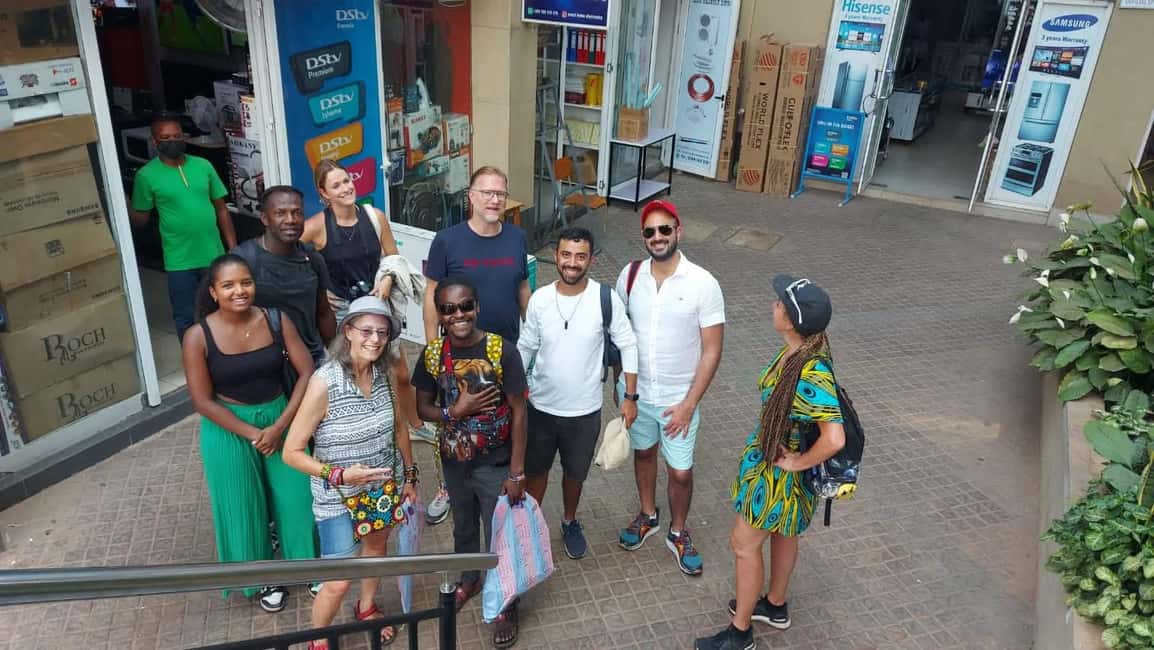
Inema Arts Centre gets another 30-minute stop. It is a natural counterpoint to the memorial, bringing the tour back to creativity and contemporary Kigali.
You can take photographs, look around, enjoy free time, and possibly try street food or local snacks. The center gives you a chance to see how artists present Rwanda today, rather than encountering the country only through historical sites.
I like this stop because art often opens conversations that a standard sightseeing route misses. Ask about the artists, the materials, and the ideas behind the work. You may also find a piece that gives you a stronger sense of Kigali’s current cultural life than a souvenir shop can provide.
Thirty minutes is enough for a focused visit, but art lovers may want longer. If galleries are your main interest, tell your guide before the tour starts. The route can be adjusted, although every change involves a tradeoff.
The motorbike transfer is connected to this part of the itinerary. You may walk to the arts center, spend time there, then ride toward the memorial. That combination gives you both a close look at the streets and a quick sense of how Kigali’s neighborhoods connect.
Downtown: city life in a compact finish
The final listed stop is Downtown, with about 30 minutes for walking, sightseeing, and an introduction from your guide. After the more focused visits to food, art, and memory sites, Downtown gives you a practical look at Kigali’s central rhythm.
This is a good place to ask the questions that arise during the tour. Where should you go next? Which areas are easy to reach by moto? Where can you find a good local drink or meal? Several visitors appreciated getting restaurant suggestions and tips for moving around the city.
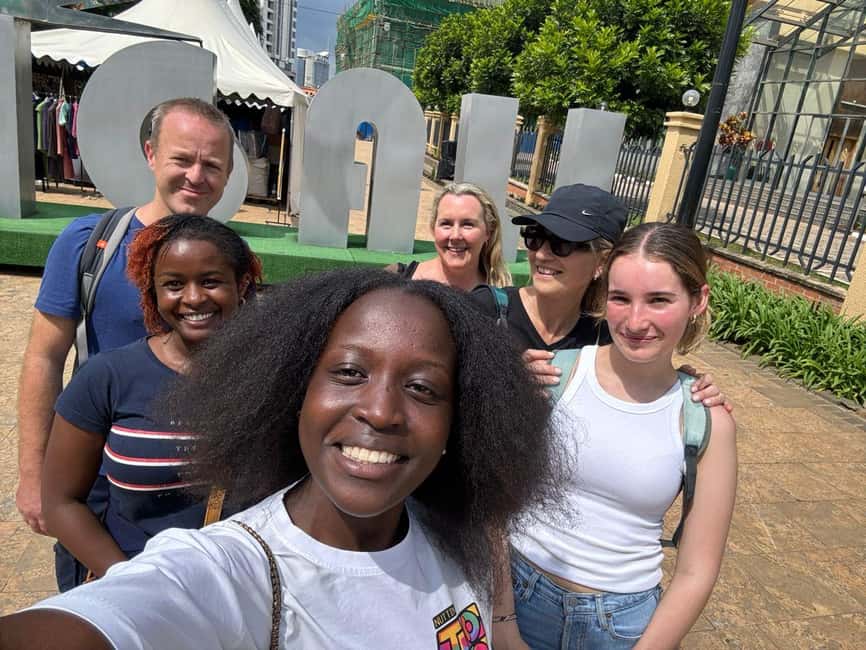
The route may also finish near a Kigali sign, useful for a photograph. You should think of Downtown as a closing orientation rather than a complete city-center tour. Kigali has several distinct areas, and 30 minutes cannot cover them all.
Still, the mix works. You see polished modern areas near Kigali Heights, public food spaces, an arts center, a memorial, and older or more active parts of town. That range helps you understand Kigali as a city that is orderly and forward-looking while still rooted in neighborhood life.
Optional neighborhoods, lake views, and extra local color
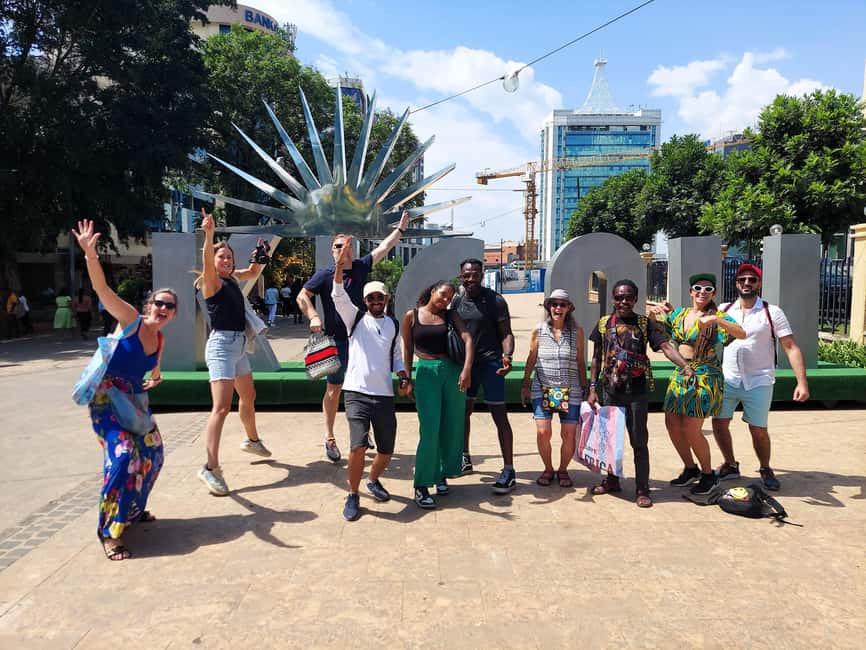
The listed route can be customized beyond the four main stops. You may ask about Nyarutarama Lake, the Nyamirambo neighborhood, local galleries, or viewpoints over the surrounding hills.
Nyamirambo is particularly useful if you want a more intimate feel for Kigali. Its alleyways and viewpoints offer a change from the formal areas around Kigali Heights and Downtown. One route variation included the Nyamirambo Women’s Center, and another included a local ginger-lemon drink. These details show how much the experience can change when you tell the guide what interests you.
Nyarutarama Lake suits you if you prefer a quieter setting and outdoor scenery. The supplied information does not promise a fixed lake visit, so treat it as an option to request, not a guaranteed stop.
The same applies to galleries and cultural sites. The guide can help you choose, but the 150-minute time limit remains. If you add a longer neighborhood visit, you may spend less time at the memorial or Downtown.
What the guide adds to the experience
The strongest part of this tour is the guide relationship. Gloria is repeatedly described as friendly, patient, enthusiastic, and easy to talk with. She explains history and culture without making the walk feel like a lecture, and she is happy to answer questions along the way.
That matters in Kigali. A local guide can explain small social details, point out places you might miss alone, and help you feel more comfortable before you explore independently. Solo women in particular may appreciate having a local companion at the beginning of a visit.
The tone appears relaxed rather than stiff. One visitor compared it to walking with a friend who knows the city, while still receiving useful historical information. Gloria also asks about visitors’ own experiences, creating a two-way conversation instead of a one-sided speech.
Guide quality can vary on any tour, but the consistent praise for Gloria is notable. If you book, it is worth confirming who will lead your departure and telling the guide your priorities. The route works best when it responds to you.
Walking, motos, weather, and what to pack

Wear comfortable walking shoes. The tour includes city streets, neighborhood walking, market areas, and possible alleyways, so fashion shoes or hard sandals are poor choices.
Bring water, a hat, a camera, and cash. Weather-appropriate clothing is important because the tour operates rain or shine. A light rain layer can be sensible, since a little rain has not necessarily stopped the experience, but you should check the forecast before leaving.
The motos are an unusual feature for a walking tour. They are short transfers, not the main activity, and they let you cover more ground within two and a half hours. They also teach you something practical about local transport.
Ask about the fare before riding and keep cash available. Since the ride is not included in the $30 price, this is one of the few extra costs to plan for. If you are uncomfortable on a motorbike, request a taxi or discuss the route with the guide.
The activity is not suitable for children under 10 or people over 70. That does not mean every younger or older person will have difficulty, but it is the stated age restriction and should guide your booking decision.
Is $30 good value in Kigali?
For $30, I see this as a good-value orientation tour, especially if you are new to Kigali. The cost includes a professional English-speaking guide, a customizable walking route, and local interpretation at several different types of stop.
You are not paying for a full-day private vehicle, museum admission, meals, or moto and taxi fares. Those exclusions keep the price fairly clear, but they also mean you should bring extra cash if you want snacks, crafts, drinks, or transfers.
The value is highest when you use the tour to improve the rest of your trip. Get restaurant suggestions. Ask how to use motos. Find out which neighborhood you should return to. Ask historical questions while the places are in front of you.
If you want a long museum visit or a complete survey of Kigali, $30 will not buy that. If you want a human introduction, practical help, and a taste of several parts of the city, it is a sensible spend.
Free cancellation up to 24 hours before the start and the option to reserve now and pay later also make it easier to fit into a changing itinerary. Check available start times when booking.
Who should book this walking tour?
I would recommend it most strongly to:
- First-time visitors who want a clear introduction to Kigali
- Solo visitors who would like local company at the start
- People interested in history, art, food, and neighborhood life in one outing
- Visitors arriving with questions about transport and where to eat
- Anyone who prefers conversation and local context over a large sightseeing bus
You may want another type of tour if you dislike walking, do not want to use motos or taxis, or want to spend a long time at one historical site. The age restrictions also rule out younger children and people over 70.
Should you book the Kigali walking tour?
Yes, if you want an approachable first look at Kigali and can accept a mixed walking and vehicle route. The combination of Biryogo, Inema Arts Centre, the Belgian Peacekeepers Memorial, Downtown, and optional neighborhood stops gives you a useful cross-section of the city.
I would book it near the beginning of your stay, then use Gloria’s suggestions to plan the following days. Come prepared for sun or rain, wear good shoes, and budget separately for short moto or taxi rides.
Skip it if you need a full city tour with every major sight included. But for $30, this is a personable and practical way to begin, especially when Gloria is guiding. The 4.9 rating from 234 ratings reflects the experience’s strongest feature: a local guide who makes Kigali easier to understand and easier to explore.
FAQ
Where does the Kigali walking tour begin?
It begins at the roundabout of Radisson and Kigali Heights, beside the fountain and statue.
How long does the tour last?
The tour lasts 150 minutes, or two and a half hours. Starting times depend on availability.
Which language is used on the tour?
The live tour is conducted in English. Guides may assist with basic translations in Kinyarwanda.
Are motorbike or taxi fares included?
No. The guide uses a motorbike or taxi to move between the art center and the Belgian Peacekeepers Memorial, and those transport fees are not included in the $30 price.
What should I bring?
Bring comfortable walking shoes, a hat, water, a camera, cash, and clothing suited to the weather.
Can the itinerary be customized?
Yes. The itinerary is customizable, with possible additions such as the Kigali Genocide Memorial, Nyarutarama Lake, Nyamirambo, local galleries, viewpoints, and food stops. Discuss your preferences with the guide at the start.
Recently added in Kigali
- Vegan Fine Dining Experience★ 5.0 · 5 reviews
- Walking Food Tour in Remera and Kigali★ 5.0 · 4 reviews
- 2 Days Mountain Gorilla Safari Rwanda★ 5.0 · 4 reviews
- Traditional Drumming and Dancing Class★ 5.0 · 2 reviews
- Gorilla Trekking Adventure – A Day trip (Only transfer)★ 5.0 · 2 reviews
- Rwanda One Day Gorilla Trekking with Iby’iwacu Culture Visit★ 5.0 · 2 reviews
- Private Transfer from Kigali Airport (KGL) to Kigali★ 4.0 · 5 reviews
- One Day Mount Bisoke Hike Adventure Tour in Volcanoes Park★ 4.5 · 4 reviews
Walking Tours, compared.


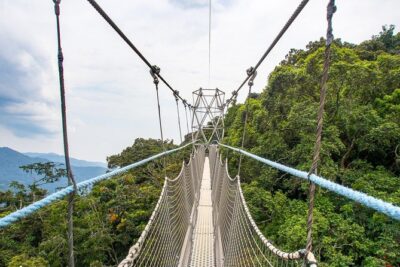
1 Day Canopy Walk Adventure in Nyungwe Forest National Park
Read our review →
Local Community Tour(Cultural, Coffee,Village walk,Local food)
Read our review →
1 Day Nyungwe Canopy Walk & Waterfall Tour adventure
Read our review →
Browse the lists this tour appears in