
Review · KIGALI TOURS
Banana Juice Making at a Local Community
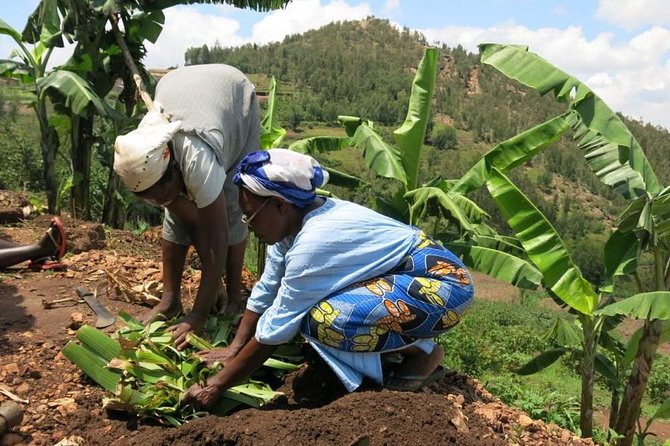
Bananas become the day’s main event. This hands-on outing from Muhanga takes you into a rural Rwandan community to pick green bananas, prepare them for ripening, and turn them into juice used at weddings and parties. I like the direct contact with local families and the way lunch, conversation, and practical work are part of the visit rather than add-ons. I also like that the day includes round-trip village transport, water, a guide, and a stop for local crafts.
The main thing to consider is the length. At five to eight hours, this is not a quick tasting. You need moderate fitness, patience with a full rural day, and enough time to reach Muhanga, since transport to the meeting point is not included. The banana preparation also requires advance planning, so last-minute bookings may not work.
In This Review
- Key things to know before making banana juice
- Starting at Azizi Life near Muhanga
- Meeting the host family in the village
- Lunch, conversation, and the pace of village life
- Turning ripe bananas into a Rwandan party drink
- More than banana juice: crafts, farming, and welcome
- Finishing at a local artisan market
- What $90 includes, and where the value lies
- Who will enjoy this experience most
- Booking timing and cancellation details
- Should you book the banana juice day?
- FAQ
- Where does the banana juice experience start?
- Where does the activity end?
- Is transportation included?
- How long does the experience last?
- What food is included?
- What will I do during the village visit?
- Is the activity private?
- How many people are needed to book?
- How far in advance should I book?
Key things to know before making banana juice

- Green bananas are buried first: You help cut and collect the bananas, then place them in a hole in the ground so they can ripen.
- Lunch is part of the cultural exchange: Expect a traditional meal such as cassava and beans, with time to talk with your hosts.
- The setting is a real rural community: Artisans and a host family welcome you rather than meeting you in a staged classroom.
- The day includes more than juice: You might fetch water, help prepare food, weave, wear traditional clothing, or take part in farm work, depending on the community visit.
- The tour begins and ends in Muhanga: Transport from Muhanga, also called Gitarama, to the village and back is included, but getting to Muhanga is your responsibility.
- Book early: A minimum of 96 hours is needed so the community can prepare the bananas.
Starting at Azizi Life near Muhanga
Your day begins at Azizi Life on NR1 in Gitarama, the former name commonly used for Muhanga. The center provides a briefing before you leave for the rural community. This first stop matters because it gives you a clear idea of the day and connects the village visit with Azizi Life’s work with local artisans.
The included transport from Muhanga to the village and back keeps the rural portion simple. You do not have to arrange a separate driver for the community visit. You do need to get yourself to the meeting point, though. If you are staying in Kigali, check the road time and plan your arrival carefully. The activity is described as being in Kigali, but the listed start point is Muhanga, so do not assume pickup from a Kigali hotel.
This is a private activity, meaning only your own group participates. That makes the visit more personal and gives you room to ask questions without speaking over a large tour group. A minimum of two people is required, and group discounts are available, so the experience may work well for couples, families with older children, or a small circle of friends.
A couple more Kigali trips worth comparing
- Kigali City Tour
★ 5.0 · 452 reviews - Kigali: Walking Tour with a Local Guide
★ 4.9 · 234 reviews - One-day Akagera National Park Game Drive with a Choice 4×4
★ 5.0 · 105 reviews
Meeting the host family in the village
At the community, artisans welcome you and you meet the family hosting you for the day. The appeal here is simple: you are not only watching a demonstration. You are given useful jobs and included in the rhythm of the visit.
The first work involves cutting and collecting green bananas. This is a hands-on task, so wear clothes and shoes that can handle outdoor work. The tour asks for moderate physical fitness, and that advice should be taken seriously. You may be standing, walking, lifting bananas, helping with food preparation, or fetching water.
The bananas are then placed in a hole in the ground for ripening. This unusual step is the heart of the experience. It shows how a familiar fruit becomes part of a local drink through a process that depends on time, labor, and careful preparation. The required 96-hour booking window allows the community to prepare the bananas properly for your visit.
The supplied schedule has you return to the bananas after lunch. You help dig them up and begin the juice-making process. Since the community prepares in advance, the exact timing of the ripening process is handled as part of the booking. Your role is to take part in the work, not simply receive a finished cup.
Lunch, conversation, and the pace of village life
After the first round of work, you can help fetch water or continue helping with food preparation. These tasks give the visit a practical feel. They also let you see that the meal is connected to the same daily work you are learning about.
Lunch may include cassava and beans, two familiar staples in a traditional Rwandan meal. Bottled water is included, as are local taxes and gratuities. The meal is more than a pause between activities. It is the main chance to sit with your hosts, ask about life in the community, and answer questions about your own home country.
I like this part because conversation is treated as an activity, not filler. You are given time to talk for about an hour, which is far better than rushing through a meal and moving to the next photo stop. Keep your questions respectful and open. The host family may be just as curious about your life as you are about theirs.
The pace can also be a drawback if you prefer tightly timed sightseeing. Rural hospitality often takes the time it takes, and the full experience may run anywhere from five to eight hours. Treat the flexible schedule as part of the visit, not as a sign that something has gone wrong.
Turning ripe bananas into a Rwandan party drink
After lunch, you dig up the bananas and continue with the juice-making process. The drink has a special place in Rwandan social life, where banana juice is commonly served at weddings and parties. That gives the activity useful cultural context. You are not learning an obscure recipe only for tourists. You are handling a drink connected with celebrations and community gatherings.
The process is physical and communal. You cut, collect, bury, retrieve, and help prepare the bananas. The work gives you a better understanding of the effort behind the final drink, and the finished juice becomes more meaningful because you helped make it.
The taste has earned strong praise, but do not expect a polished bar-style service. This is a village activity built around local methods and shared work. The most memorable part may be the sequence of tasks, the laughter, and the chance to compare the finished juice with the raw ingredients.
The atmosphere can become playful toward the end. The day may include dancing and laughter, and one account describes traditional clothing as part of the visit. You may also have the chance to weave, fetch crops, feed cows, or help gather Napier grass, depending on the community and host arrangements. These extras are not presented as guaranteed steps for every booking, so think of them as possible additions rather than promises.
Further into the hills, and a longer day:
- Private Full-day Kigali City Tour with Pickup and Lunch
★ 5.0 · 79 reviews - Kigali Walking Tour
★ 4.5 · 78 reviews - Kigali E-Bike City Tour with Breakfast
★ 4.9 · 73 reviews - Private 1 Day Akagera Big Five Safari with pick up and lunch.
★ 5.0 · 72 reviews
More than banana juice: crafts, farming, and welcome
Azizi Life works with artisans, and the visit may include small demonstrations or activities beyond the main drink. Weaving is one example. Trying a craft gives you another way to connect with your hosts, and it may help you understand the skill behind items later sold at the artisan market.
Traditional attire may also be offered for you to wear during the visit. This can make for memorable photographs, but ask before taking pictures and follow your host’s lead. The strongest part of this kind of cultural meeting is mutual respect, not collecting costumes and snapshots.
Farm work can also appear in the day. Feeding cows or helping gather Napier grass gives you a glimpse of the work that supports a household. Again, these details can vary, so keep a flexible attitude. The core promise is banana juice making, lunch, local hosting, and transport. The other activities depend on the community visit and the day’s arrangements.
I especially like that the most praised moments are social: being welcomed warmly, laughing together, dancing at the end, and sharing a meal. Those moments cannot be reduced to a checklist, and they are why this suits you if you want conversation and participation instead of a quick cultural performance.
Finishing at a local artisan market
Before returning to Muhanga, the experience includes time at a local handicraft store or artisan market. This is a sensible final stop. You can see the type of work made by local artisans and buy a souvenir with a connection to the community program.
Shopping is optional, but it gives you a chance to support the people whose work helps make the visit possible. Take your time looking at the goods and ask about the materials or makers. Do not feel pressured to buy, but also remember that a small purchase can be a more direct form of support than a generic souvenir from a city shop.
The market stop may be brief compared with the village visit. If your priority is shopping, this is not a dedicated craft tour. The main value is the day with the host family, while the market provides a useful closing note and a practical way to take something home.
What $90 includes, and where the value lies
The price is $90 per person. That is not a bargain-priced half-day outing, especially because you must arrange your own transport to Muhanga. Still, the fee covers a long private activity with a local guide, village transport, lunch, bottled water, local taxes, and gratuities.
The value depends on how you like to spend a day. If you only want to taste banana juice, the price is hard to justify. If you want a full cultural encounter with practical work, a meal, host interaction, and craft shopping, the cost is easier to defend.
Group discounts may improve the price for larger parties. Since the activity is private, your group gets the host family’s attention rather than joining a crowded departure. That can matter if you want to ask questions or need the guide to adjust the pace.
You should also factor in the time and cost of reaching Muhanga. Transportation from Muhanga to the village is included, but transport to and from Muhanga is not. The provider says this can be arranged for an additional payment, so ask about that before booking if you are not already based near the meeting point.
Who will enjoy this experience most
I would recommend this to you if you enjoy learning by doing. You should be comfortable with outdoor work, a flexible schedule, simple local food, and social contact with a host family.
It is a good fit for:
- Couples seeking a private cultural activity
- Small groups that can use a group discount
- Families with children who can manage a moderate level of activity
- Visitors interested in food traditions and rural life
- People who value conversation, crafts, and community contact
- Anyone who wants more than a standard city sightseeing stop
It may not suit you if you have limited mobility, want a short tasting session, or need a tightly controlled timetable. Service animals are allowed, and the meeting point is near public transportation, but the rural activities themselves require a moderate physical fitness level.
Children can join at a child rate only when sharing with two paying adults. The minimum booking is two people, so solo visitors cannot book this activity on their own under the stated conditions.
Booking timing and cancellation details
Book at least 96 hours before the start time. The community needs that notice to prepare the bananas, and a shorter booking may lead the supplier to ask you to reschedule. Confirmation is sent within 48 hours, subject to availability.
Free cancellation is available up to 24 hours before the local start time for a full refund. Cancellations or changes made less than 24 hours before the start time are not accepted for a refund, so keep that cutoff in mind when planning transport to Muhanga.
Should you book the banana juice day?
Book it if you want an active, personal introduction to rural Rwandan life. The strongest reasons are the host family welcome, the chance to work through the banana process yourself, the shared meal, and the possibility of ending with music, laughter, crafts, or farm work.
Skip it if you only have a few hours in Rwanda or do not want to arrange your own way to Muhanga. The $90 price makes sense for a full private day with food, guiding, and local transport, but it is not designed as a cheap drink-making class.
For the right visitor, this is a memorable way to understand a familiar fruit in an unfamiliar role. You leave with more than juice. You have seen the work, shared a table, and taken part in a celebration drink made the local way.
FAQ
Where does the banana juice experience start?
It starts at Azizi Life on NR1 in Gitarama, also called Muhanga, Rwanda.
Where does the activity end?
The activity ends back at the meeting point in Muhanga.
Is transportation included?
Transport from Muhanga to the rural village and back is included. Transportation to and from Muhanga is not included, but the provider can arrange it for an additional payment.
How long does the experience last?
The activity lasts approximately five to eight hours. The listed itinerary describes it as an eight-hour experience.
What food is included?
Lunch is included. The meal may include traditional Rwandan food such as cassava and beans. Bottled water is also provided.
What will I do during the village visit?
You will help cut and collect green bananas, bury them in a hole for ripening, dig them up later, and take part in making the juice. You may also help fetch water or prepare food.
Is the activity private?
Yes. Only your own group participates in the activity.
How many people are needed to book?
A minimum of two people is required per booking.
How far in advance should I book?
You should book at least 96 hours before the experience begins so the community has time to prepare the bananas. Confirmation is provided within 48 hours, subject to availability.
Recently added in Kigali
- Vegan Fine Dining Experience★ 5.0 · 5 reviews
- Walking Food Tour in Remera and Kigali★ 5.0 · 4 reviews
- 2 Days Mountain Gorilla Safari Rwanda★ 5.0 · 4 reviews
- Traditional Drumming and Dancing Class★ 5.0 · 2 reviews
- Gorilla Trekking Adventure – A Day trip (Only transfer)★ 5.0 · 2 reviews
- Rwanda One Day Gorilla Trekking with Iby’iwacu Culture Visit★ 5.0 · 2 reviews
- Private Transfer from Kigali Airport (KGL) to Kigali★ 4.0 · 5 reviews
- One Day Mount Bisoke Hike Adventure Tour in Volcanoes Park★ 4.5 · 4 reviews
Kigali Tours, compared.


One-day Akagera National Park Game Drive with a Choice 4×4
Read our review →
Private Full-day Kigali City Tour with Pickup and Lunch
Read our review →

Private 1 Day Akagera Big Five Safari with pick up and lunch.
Read our review →
Mount Kigali and Cultural Village Tour with Snacks
Read our review →Browse the lists this tour appears in